
CVT technology, or continuously variable transmission technology, is an automatic transmission system that uses two pulleys connected by a steel belt or chain to provide an infinite range of gear ratios. Unlike traditional automatics that shift between fixed gears, a CVT smoothly adjusts pulley diameters to deliver optimal power at any speed. First introduced in mainstream passenger vehicles in the 1990s, CVT technology now powers millions of cars worldwide because of its fuel efficiency, smoother driving experience, and simpler mechanical design.
What is a CVT (continuously variable transmission)?
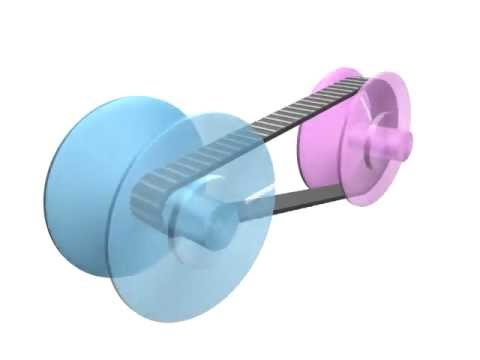
A CVT is a type of automatic transmission that uses two variable-diameter pulleys connected by a steel belt or chain to change gear ratios continuously. Instead of shifting between preset gears like a traditional automatic, a CVT smoothly adjusts the effective diameter of each pulley to deliver the ideal ratio for any driving condition. This eliminates the jerk of traditional gear shifts and keeps the engine running at its most efficient RPM regardless of vehicle speed.
The technology has been in commercial passenger vehicles since the late 1980s, but became widely adopted by major manufacturers starting in the mid-2000s. Today, over 15 million CVT-equipped vehicles are on the road globally, with Japanese and Korean automakers leading in adoption.
How does a CVT work?
A CVT works by continuously adjusting the diameter of two conical pulleys connected by a metal belt or chain. As the input pulley narrows, the belt rides higher on it and lower on the output pulley, changing the effective gear ratio. This adjustment happens in real time based on engine load, throttle input, and vehicle speed. The result is a smooth, seamless flow of power without the mechanical shift points found in traditional transmissions.
Three main components make this work:
- Input pulley (drive pulley): connects to the engine and can expand or contract
- Output pulley (driven pulley): connects to the wheels and moves opposite to the input pulley
- Steel belt or chain: transfers power between the two pulleys and rides at different heights depending on the current ratio
The control unit adjusts pulley diameters hundreds of times per second, always searching for the ratio that lets the engine operate at peak efficiency for the driver’s demand.
Which vehicles use CVT transmissions?
CVT transmissions are common in vehicles from Nissan, Honda, Toyota, Subaru, and Mitsubishi. Popular models include the Nissan Altima and Rogue, Honda Civic and CR-V, Toyota Corolla and RAV4, and Subaru Outback and Forester. Manufacturers adopted CVTs to improve fuel efficiency and deliver a smoother driving experience, especially in compact and midsize passenger vehicles where responsiveness and economy matter most.
Nissan uses CVTs across the widest portion of its lineup, having invested heavily in the technology since the early 2000s. Subaru pairs CVTs with its symmetrical all-wheel-drive system in nearly every model. Honda and Toyota use CVTs selectively in their fuel-economy-focused models, while pairing traditional automatics with performance-oriented vehicles.
What are the benefits of CVT technology?
CVT technology offers three primary benefits: better fuel efficiency, smoother acceleration, and simpler mechanical design. Because the engine can stay in its optimal power band regardless of vehicle speed, CVTs typically deliver 5 to 10 percent better fuel economy than conventional automatics. The absence of hard shifts also produces a more comfortable ride, especially at highway speeds. Fewer moving parts can also mean potentially lower long-term maintenance costs.
- Fuel efficiency: The engine always runs at its most efficient RPM for the current speed, rather than being forced into whatever gear is available.
- Smooth acceleration: No shift points means no jolts. Acceleration feels linear and continuous from a stop through highway speeds.
- Simpler design: Fewer gears means fewer parts, less weight, and less complexity in the transmission housing.
- Better hill climbing: The transmission can hold the engine at peak torque RPM as long as needed, rather than shifting up and losing power.
What fluid does a CVT need?
A CVT requires specialized continuously variable transmission fluid, not conventional automatic transmission fluid. CVT fluid contains specific friction modifiers and viscosity additives that allow the belt or chain to grip the pulleys without slipping. Using the wrong fluid can cause premature transmission failure. Always confirm the exact CVTF specification required by your vehicle manufacturer. ENEOS produces CVT-specific fluids formulated for Nissan, Honda, Subaru, and other manufacturer requirements.
Common CVT fluid specifications include:
- Nissan NS-2 and NS-3: used in most Nissan and Infiniti CVTs
- Honda HMMF and HCF-2 CVTF: used in Honda and Acura CVTs
- Subaru CVTF II and III and Lineartronic CVTF: used in Subaru CVTs
- Mitsubishi CVT Fluid J1 and J4: used in Mitsubishi CVTs
- Toyota CVT Fluid TC and FE: used in Toyota and Lexus CVTs
Each specification calls for a unique friction profile. Substituting a Nissan-spec fluid in a Honda CVT, for example, can cause belt slippage and transmission damage within a few thousand miles.
How often should CVT fluid be changed?
Most manufacturers recommend changing CVT fluid every 30,000 to 60,000 miles under normal driving conditions. Severe conditions such as towing, mountain driving, or frequent stop-and-go traffic can shorten this interval significantly. Check your owner’s manual for the exact schedule for your specific vehicle. Regular CVT fluid changes are the single most important factor in transmission longevity, since degraded fluid causes belt slippage, overheating, and eventual transmission failure.
Some newer vehicles claim “lifetime” CVT fluid, but real-world experience shows fluid still degrades and should be changed. Independent transmission specialists commonly recommend changing CVT fluid every 30,000 miles regardless of manufacturer claims, since replacing a CVT costs thousands of dollars while a fluid change costs under $200.
What are the signs of CVT problems?
Common signs of CVT problems include shuddering during acceleration, delayed engagement when shifting into drive or reverse, whining or grinding noises, slipping between gears, and warning lights on the dashboard. Burnt-smelling or dark fluid also indicates degradation. Address any of these symptoms promptly to avoid costly transmission failure. Regular fluid inspection and adherence to manufacturer service intervals prevent most CVT problems before they become serious.
Watch for these specific warning signs:
- Shuddering at low speeds: often the first sign of belt slippage from degraded fluid
- Delayed engagement: noticeable pause between shifting into drive and the vehicle moving
- RPM flare on acceleration: engine revs climb faster than vehicle speed
- Whining or humming sounds: may indicate bearing wear or fluid contamination
- Check engine or transmission warning light: any related fault code should be diagnosed immediately
- Overheating: CVTs are more sensitive to heat than traditional automatics
Catching any of these early can mean a fluid change and inspection instead of a full transmission replacement.
Choosing the right CVT fluid for your vehicle
The right CVT fluid is not optional. It is essential to protecting your transmission. ENEOS has produced CVT fluid as factory fill for Japanese automakers since 2005, developing formulations that meet the exacting specifications of Nissan, Honda, Subaru, and other manufacturers. Whether your vehicle requires Nissan CVTF NS-2, NS-3, Honda HMMF, HCF-2 CVTF, Subaru CVTF II and III, or another OEM specification, ENEOS offers a matched CVT fluid designed for that application.
Look for CVT fluid that specifically lists your vehicle’s required specification on the label. Universal or multi-vehicle CVT fluids should be evaluated carefully because CVT friction requirements vary significantly between manufacturers. When in doubt, either use the factory-recommended fluid or contact an ENEOS representative for the exact match to your vehicle.